
Horizon Family Dental Care offers many options to replace one or more missing teeth. Our restoration dentistry treatments will restore oral health and the look of your smile. One solution we offer is a dental bridge in Baltimore, MD.
Missing teeth are a chronic oral health issue. Restoring the gap in your smile as soon as possible benefits your long-term health. A bridge is a great solution that will restore your smile. We offer a few kinds of bridges to accommodate the needs of our patients.
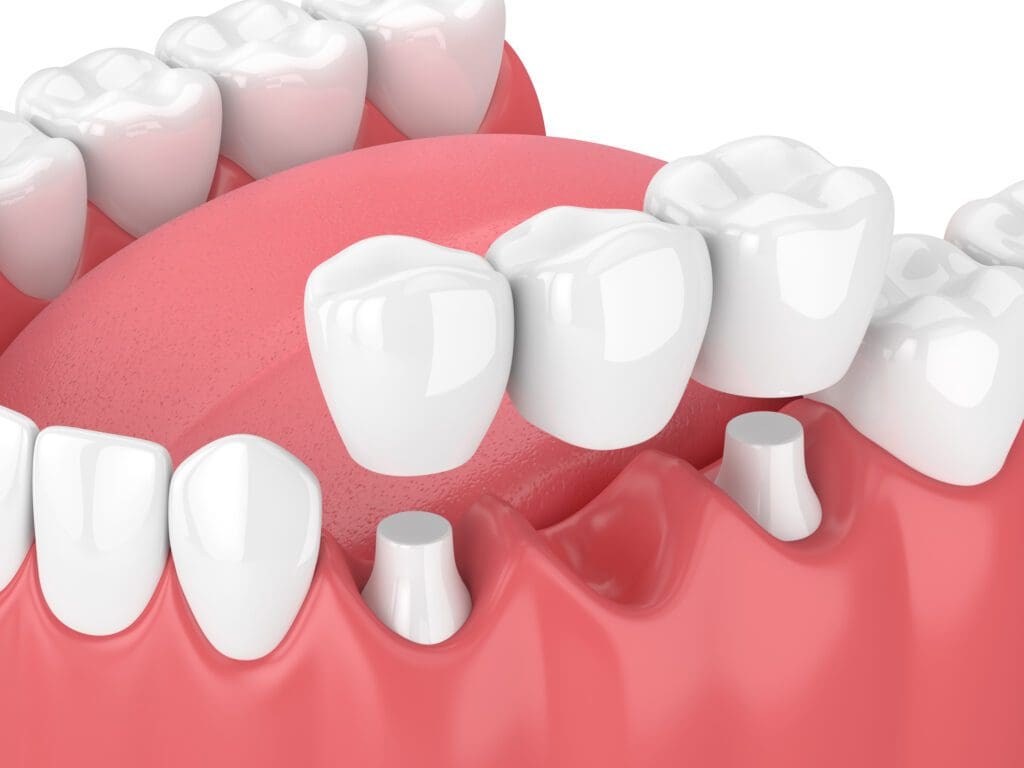
What is a Dental Bridge?
A dental bridge is a fixed prosthetic restoration made up of several components. The false teeth, called pontics, are between two dental crowns. As a single fixture, it is designed to span the space left by a missing tooth or several missing teeth in a row. The crowns on each end will anchor the prosthesis in place.
Depending on the type of bridge you get, our dentist will anchor it to adjacent teeth or dental implants. A dental bridge will restore your mouth function, prevent misalignment, and lower your chance of bite issues.
Types of Dental Bridges
We offer both traditional and implant-supported dental bridges. These two standard options provide unique benefits. Our dentists will review each option with you before treatment.
Traditional Dental Bridge
A traditional dental bridge, also known as a fixed dental bridge, is a standard tooth replacement. It can replace one tooth or several missing teeth. Our dentist will customize a dental bridge with a pontic or multiple pontics and dental crowns.
We must prepare the adjacent teeth to accommodate the fixture. This involves permanently reducing them in size. Then, we cement the crown portions of the bridge to the prepared teeth. Traditional bridges are a good option when the adjacent teeth are healthy and can support the additional load.
Implant-Supported Dental Bridge
Using dental implants to replace teeth offers more stability and longevity. An implant-supported dental bridge can replace several missing teeth in a row. The dentist must surgically place at least two dental implants into the jawbone at both sides of the gap. Then, the permanent bridge is secured to the dental implants. They will provide a strong and durable anchor for the bridge.
Implant-supported bridges are particularly beneficial when the adjacent natural teeth are weak or when multiple teeth are missing, as they do not rely on existing teeth for support.
Removable Dental Bridge
A removable dental bridge, also called a partial denture, is reserved as a short-term solution. While the cost may be lower initially, a removable dental bridge does not offer good long-term benefits and frequently requires replacement and repairs. Dentists often use a removable dental bridge as a temporary solution while waiting for the permanent bridge to be fabricated.
Traditional Dental Bridge vs Implant-Supported Dental Bridge
There are several key differences between a traditional bridge and an implant-supported bridge. A dentist will use adjacent teeth to support a traditional bridge, while they will use dental implants to support the implant bridge.
The dentist will need to reduce the teeth in size to accommodate the dental bridge. This will make the teeth more susceptible to decay and place extra strain on them. When you place implants in the jaw, they absorb all the strain, leaving your natural teeth untouched.
Dental implants also prevent bone loss in the jaw. When the implants are in the jaw, they stimulate the bone, allowing for regeneration. The bone will slowly reabsorb with a traditional bridge from a lack of stimulation.
How to Care for Your Dental Bridge
Taking good care of your dental bridge helps it stay strong, comfortable, and long-lasting. With the right care, a dental bridge can last many years and keep your smile looking natural.
Regular dental visits are one of the most important steps. When you come to Horizon Family Dental Care for checkups and cleanings, our team can look closely at your bridge and the teeth supporting it. We can spot early signs of wear, looseness, or decay and treat problems before they become serious. This helps you avoid discomfort and costly repairs later on.
Good care at home is just as important. Brush your teeth at least twice a day using a soft-bristled toothbrush and fluoride toothpaste. Pay special attention to the area around your bridge to keep plaque from building up. Floss every day to clean between your teeth and under the bridge. Your dentist may recommend special floss, a floss threader, or a small brush to help clean hard-to-reach areas.
Patient Review
Frequently Asked Questions
Do you have more questions? We’re here to help. Read answers to commonly asked questions about dental bridge treatment in Baltimore, MD.
How many teeth can a dental bridge replace?
A dental bridge can typically replace one to four teeth in a row. If you are missing more than four teeth, a bridge may become less stable and not work as well. The exact number depends on the health of the adjacent teeth and the location of the gaps. You must have strong teeth on both sides of the missing ones to support the bridge properly.
How long does the dental bridge procedure take?
The dental bridge process takes two visits to the dentist. During the first visit, which lasts about an hour, your dentist prepares the teeth on either side of the gap and takes impressions. You’ll receive a temporary bridge while the dental lab makes your permanent one. It typically takes them about a week or two to make.
On the second visit, the dentist fits and cements the permanent bridge. If adjustments are needed, you might have to return for a follow-up visit. Overall, expect the entire process to take a few weeks.
Is the dental bridge procedure painful?
The dental bridge process is usually not painful. We use local anesthesia to numb the area around the teeth we need to work on. But you may feel sore or sensitivity in your gums and teeth as they adjust. This discomfort is normal and should go away within a few days.
Can you repair a bridge?
A traditional dental bridge will need a repair if the supporting crowns become loose or damaged. Our dentists may need to remove the bridge to examine the abutment teeth and, if necessary, fabricate new crowns. If the bridge cracks or is completely damaged, you may need to have a new one fabricated. In this case, we’ll remove the old bridge and fit you for a new one.
How do dental bridges compare to dental implants?
We use dental bridges and dental implants to replace missing teeth, but they have key differences. Dental bridges are made to fill gaps by attaching to nearby teeth. They are less expensive and can be completed in just a few visits. We must alter the surrounding teeth, and the bridge will not last as long.
Dental implants, on the other hand, involve surgery to place a metal post in the jawbone that acts as a tooth root. They last longer, often for a lifetime, and do not affect surrounding teeth. Implants also help prevent jawbone loss. While they cost more upfront, they may be a better long-term investment.
How long do dental bridges last?
Dental bridges typically last 5 to 15 years or more. The exact lifespan of your bridge depends on several factors, including the type of bridge and how well you care for it. Traditional bridges usually last longer, around 10 to 15 years, while cantilever bridges may last about 5 to 10 years.
Implant bridges last over 15 years. The implant posts are permanent, while you need to replace the bridge after many years.
Can I get a dental bridge on my front teeth?
Yes, we can place dental bridges on the front teeth. We can use a Maryland bridge or a traditional bridge for the front teeth. Maryland bridges require less preparation of the nearby teeth and are less noticeable. Traditional bridges provide strong support and a natural look.
Schedule Your Consultation for a Dental Bridge in Baltimore, MD
If you have a few missing teeth in a row, then we can provide you with a dental bridge in Baltimore, MD. To book your appointment, contact our Baltimore dentist office. You can also call 555-555-5555.